BLOG

Dating in the Time of #BlackLivesMatter

This is a repost from Racism Review. I am reposting my pieces from that platform to this blog due to the fact that the Racism Review blog is no longer active. Unfortunately, the post does not survive on the Wayback Machine via the Internet Archive, so the only available version will remain here on my personal blog with a few updates. The text of this piece was originally published on February 24, 2016.

Kerry Anne and Michael Gordon join a Black Lives Matter protest taking place alongside their wedding ceremony at The Logan hotel in Philadelphia on June 6, 2020.
Dr. Kerry Anne Perkins and Michael Gordon join a Black Lives Matter protest taking place alongside their wedding ceremony at The Logan hotel in Philadelphia on June 6, 2020. SOURCE: Linda McQueen—Linda McQueen Photography

When I started my dissertation research a year ago, I had not considered what impact the widespread media coverage of #BlackLivesMatter as a movement and rallying cry might have on my respondents. With my research, I intended to explore the online dating experiences of women who identify as multiracial here in Texas; what I have found has been a complex mobilization of Black Lives Matter as a metric of racial progressiveness. In 2016, it has become clear that the increased media attention being paid to the Black Lives Matter (BLM) movement is shaping a particular orientation toward, and conversation around, race and racism in the United States. As scholar Khury Petersen-Smith notes, the movement has “shattered what remained of the notion of a ‘post-racial’ America.” More specifically, my work has found that BLM has impacted individual-level relationships, creating a framework within which people are able to evaluate and “vet” their dating partners, especially amidst claims that society is more “progressive” and that the atrocities we have witnessed are “not about race.” 

As every good social scientist knows, words mean things. The language around, and produced by, movements like BLM – particularly in regards to discourses of race, racial inequality, state-sanctioned violence, and racism – has influenced the ways in which the multiracial women in my study discuss race, racism, and inequality in the context of their intimate relationships. Several women have described using their own stances on the issues BLM addresses as a means of selecting potential dating partners. This finding suggests that BLM and other widespread social justice movements are having significant impacts on how people are navigating racial politics on an interpersonal level. This is particularly pertinent during a time where U.S. media and popular culture is especially focused on issues of racism and state-sanctioned violence.  

Thus, Black Lives Matter provides multiracial women with a means of framing their commentary on racism, racial inequality, and violence. Often, these women describe trying to find a “middle ground” in which to exist politically, so as to not fall within the so-called “extremes.” This middle ground calls to mind the notion of mixed-race people being a “bridge” between communities. The “middle ground” also suggests that to be on the extremes is to identify too closely with blackness or to not be “beyond” race. Thus, many women expressed contradictions over the course of their interviews; for several women the tensions around race and racism are issues of “diversity” and something that these women perceive black people to be “ethnocentric” about. It is telling that the multiracial women who believe that the concerns of BLM are solely concerns for black people are women who are not of black descent. However, women of myriad mixed racial backgrounds – including those who are not part black – noted that the issues the movement highlights are concerns for us all.  

Alternatively, the women concerned with the so-called “appropriate” behavior of those interacting with the police rather than the inequality inherent in police violence rely on counter-Black Lives Matter narratives. They suggest that if someone is “acting stupid,” then an officer can only assume they are “dangerous and on drugs.” As social scientists have demonstrated for decades, overwhelmingly, the people who are assumed to be dangerous and on drugs are people of color. Virtually every woman who indicated that those killed by police are somehow responsible also relied on some “liberal” talking points, suggesting that officers “not go for the kill shot right away” or that “we need better training.” However, these women also used anti-black logic, which suggests that those killed by police are the deserving aggressors. Virtually all the women I interviewed who opposed BLM utilized the “some bad apples” discourse to suggest that these instances of police brutality are isolated incidents. This logic enabled several women to suggest that the movement is being overly sensitive and that the wrongdoing is on “both sides.”  

In terms of dating, women who consider potential dating partners’ views on issues of race and racism were invested in finding someone capable of making informed commentary. White masculinity in particular has a specific meaning in this political climate. Some multiracial women expect white men they date to have a certain racial literacy – the racial socialization and antiracist training that defends against and counters racism – and would not consider dating (white) men who are not at least marginally versed in anti-racist discourse and logics. This, however, is not necessarily a requirement for all potential partners, as several women indicated that they assume that men of color will just “get” that racism exists. So, white men are expected to provide proof that they “get it,” much of which is proven through how they engage with discourses around race and racism. Several women described pulling up videos of police assaults – such as the now infamous pool party in McKinney, TX – or referencing other news stories during dates in order to see how men would react.  

While it may not be surprising that women are excluding partners that they do not view as compatible, it is notable that several women indicated that “what’s going on” in the U.S. did not seem to matter much until about two years ago, correlating with the rise in Black Lives Matter demonstrations and news coverage. Public discourses impact our everyday lives, particularly the highly racialized, classed, and sexualized process of dating. We should be concerned for not only how people are responding to BLM and other related social movements, but also how people are implementing racial rhetoric in their everyday lives. As the mixed-race women in my research illustrate, the dating practices of Americans have the unfortunate potential to continue to reproduce much of the polarizing and unequal racial politics, as well as inherently unequal social structures, that have made Black Lives Matter and its like necessary in the first place. 

Modern Romance and the Glaring Absence of Race

This is a repost from Racism Review. I am reposting my pieces from that platform to this blog due to the fact that the Racism Review blog is no longer active. While the post survives in part on the Wayback Machine via the Internet Archive, it will also remain here on my personal blog with a few updates. The text of this piece was originally published on November 7, 2015.

Race is at the center of how we construct and act on our notions of desire, but you wouldn’t know that from reading Modern Romance, a unique collaboration between a sociologist and a comedian.

In collaboration with sociologist Eric Klinenberg, Aziz Ansari wrote Modern Romance, a book that explores “dating in the digital age.” Addressing the contemporary dynamics of romantic relationships – which are often mediated through various forms of technology (cell phones, online dating websites, etc.) – a major draw of Ansari’s New York Times best-selling book is that it seems to explain why young people are so “awful” about dating more traditionally and therefore, are not good at getting married.

Ansari, a comedian by trade, has established himself as someone who makes (albeit marginally) insightful observations about inequality, particularly when it comes to race, as with his new Netflix series Master of None.

In fact, Ansari notes that racism in Hollywood – specifically the problematic representation of Indian and other South Asian characters – was a central motivator for his creation of Master of None, as no one else would have offered him this role:

When they cast these shows, they’re like, ‘We already have our minority guy or our minority girl.’ There would never be two Indian people in one show. With Asian people, there can be one, but there can’t be two. Black people, there can be two, but there can’t be three because then it becomes a black show. Gay people, there can be two; women, there can be two; but Asian people, Indian people, there can be one but there can’t be two. Look, if you’re a minority actor, no one would have wrote this show for you… Every other show is still white people.

This astuteness around issues of race, racism, and representation are what drew me to Ansari’s book on dating this summer.

Modern Romance: Ansari, Aziz, Klinenberg, Eric: 9780143109259: Amazon.com:  Books

The book, however, is deeply flawed when it comes to any form of analysis of race. Considering Ansari’s awareness around issues of race in his comedy, I found the glaring absence of race in this book extremely disappointing. How one can write about “modern” romance and not note the role that race plays in terms of who is or is not deemed attractive is actually quite mind-boggling.

Modern Romance assumes a consistency of dating experience across race that is problematic. Assuming that people of color have had the same experiences as, or with, white people with online dating is critically irresponsible and is contradicted by the research. White millenials in particular have proven time and time again they are not as progressive as they are assumed to be, including in who they choose to date (or exclude from dating).

Even best-selling author and OKCupid co-founder Christian Rudder notes the continued role of racism in the chances of finding a partner online in his book Dataclysm and on the blog OKTrends. He reiterated this fact again during a Q&A at the 2015 meeting of the American Sociological Association in Chicago that I attended. When Helen Fisher of Match.com suggested that online dating had wiped out prejudice, he was quick to correct that misperception. Given the widely known and easily available data on race and online dating, the disappearing of race from Modern Romance’s analysis is all the more curious. This colorblind approach does little to help us understand contemporary intimacies that begin online and does even less to advance sociological understanding of modern romance.

Ansari does not mention the racial or class identities of the daters except for two Indian American men in a focus group. Thus, the text allows heterosexual middle class whiteness to masquerade as “universal.” This is particularly evident when Ansari and Klinenberg discuss the dynamics of traditional means of meeting potential dating partners with some residents of a New York City retirement home.

As the older informants in their book relate how they met their partners in their apartment buildings or in their neighborhoods, the book conveniently avoids noting how segregation and the white habitus were at play in terms of determining who people had access to decades ago and at present. When Ansari attempts to explicitly address race, it is treated as a cute joke. Ansari notes that he would have had a “hard time” trying to date in the 1950s due to being “brown” but he doesn’t go beyond that. Xenophobia, racism, and a variety of structural and legal inequalities also go without mention (Loving v. Virginia, for example) in Ansari’s brief commentary on his prospects in the time “before technology took over.”  It’s unclear what motivates this gaping lack of critical analysis other than a desire to maintain the levity of the book and, possibly, to avoid the “messiness” of race for Ansari’s predominantly white “progressive” audience.

More disturbingly, however, the book does an excellent job of perpetuating racist stereotypes. The author(s) herald the fact that they did not just rely on focus group and interview data from the States; they also talked with people in Buenos Aires, Argentina, Paris, France, Tokyo, Japan, and Doha, Qatar. Yet, the “international perspectives” chapter focuses mainly on contrasting Japan, Argentina, and the U.S.

In a problematic set of metaphors, the Japanese – particularly the men – are referred to as “herbivores” in contrast to the “rib eye-eating maniacs” of Argentina. This distinction perpetuates Western understandings of the sexuality of Asian and Latino men. There is a lengthy history of fetishizing the virility and “hot bloodedness” of Latino men while denigrating the lack of these qualities in Asian men in the United States, a dynamic that is well-documented in studies of interracial marriages (see NemutoSteinbugler or Frankenberg). These stereotypes inform not only dating and marriage dynamics in the U.S., but serve as motivation for phenomena such as sex tourism. Further, recent sociological studies have led to a focus in the media around the racist preferences of online daters, specifically the lesser prospects of black women and Asian men.

There may be nothing “new” about the relationships between race, sex, and romance, but if we truly want to understand “modern” romance, researchers (and comedians) must work to avoid strengthening colorblind logics.

The Problem with Saying ALL Lives Matter

This is a repost from Racism Review. I am reposting my pieces from that platform to this blog due to the fact that the Racism Review blog is no longer active. While the post survives in part on the Wayback Machine via the Internet Archive, it will also remain here on my personal blog with a few updates. The text of this piece was originally published on May 20, 2015.

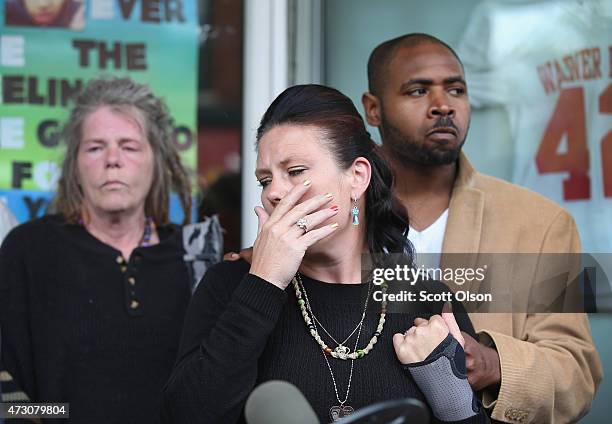
17 Family Of Tony Robinson Holds Press Conference At Site Of Police Fatal  Shooting Photos & High Res Pictures - Getty Images
Turin Carter he uncle of 19-year-old Tony Robinson, speaks to the media outside the home where his nephew was killed on March 9, 2015 in Madison, Wisconsin. Source: Scott Olson/Getty Images

“We don’t want to stop at just “black lives matter” because all lives matter. To look at Tony and say that he’s just black, based just off his appearance, is something we’re basing legislation that is 150 years old almost now – less than that. I’m referring to Plessy v. Ferguson, okay. Terrell is a mixture of everything. You can’t look at him and say he’s black. He’s black, white, he’s a mixture of everything because we all have our own complex heritage.” ~ Turin Carter, uncle of 19-year-old Tony Robinson, shot and killed by police

In the wake of a Mother’s Day that seemed to weigh more heavily than those of past years, I found myself returning to comments made in March of this year. When I first read of Turin Carter’s remarks on the fatal shooting of his nephew, Tony Terrell Robinson, Jr., I found myself equally saddened and frustrated. Yet, in the midst of my empathy, I found Carter’s heart-wrenching admission that Tony was a “misfit” and that he “just wanted to be loved” to be troubling.

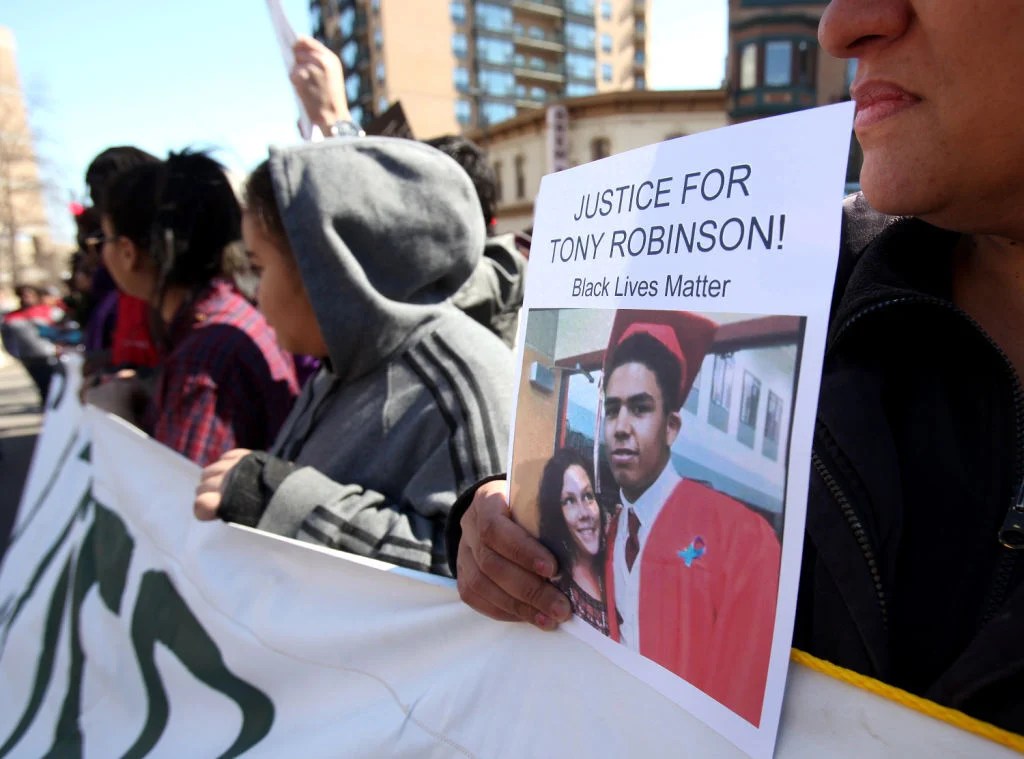
Students protest the officer-involved shooting death of Tony Robinson Jr. in 2015. Source: MIKE DeVRIES

Virtually all American blacks are considered to be of “mixed” descent due to rape during slavery and a long history of interracial relationships, but Carter’s comments suggest that to talk about black lives mattering is to not be wholly inclusive of his nephew’s life.

The narrative of mixed-race children who can find no place because they are so ambiguous perpetuates the stereotype of the “tragic mulatto” who can never find love.  Alongside Robinson’s “need to be loved,” Carter repeatedly insists in his drafted statement – and in response to the questions that follow – that Tony is not “just” black. And yet, he describes Tony as one of several “black children” of a white mother. The emphasis on Tony’s mixedness and how it caused him a particular kind of emotional duress – even while acknowledging that Tony was a “black child” – reifies Tony’s differentness from other young black men who have been killed by police.

As Carter notes, “we don’t want to stop at just black lives matter because all lives matter.” As well-intentioned as I’m sure his comment was, it reinforces the “all lives matter” rebuttal that pushes back against the #blacklivesmatter movement and serves as a means of erasure. Insisting that “all” lives matter suggests that a focus on black lives – which are being disproportionately snuffed out – is not inclusive of the various ways that state-sanctioned violence impacts our society. The push for recognition of “all lives” implies a universality of experience, rooted in a universal humanism that is less anti-racist and more colorblind. To say that black lives matter is not to say that other lives do not.

Black Lives Matter protests: What you need to know
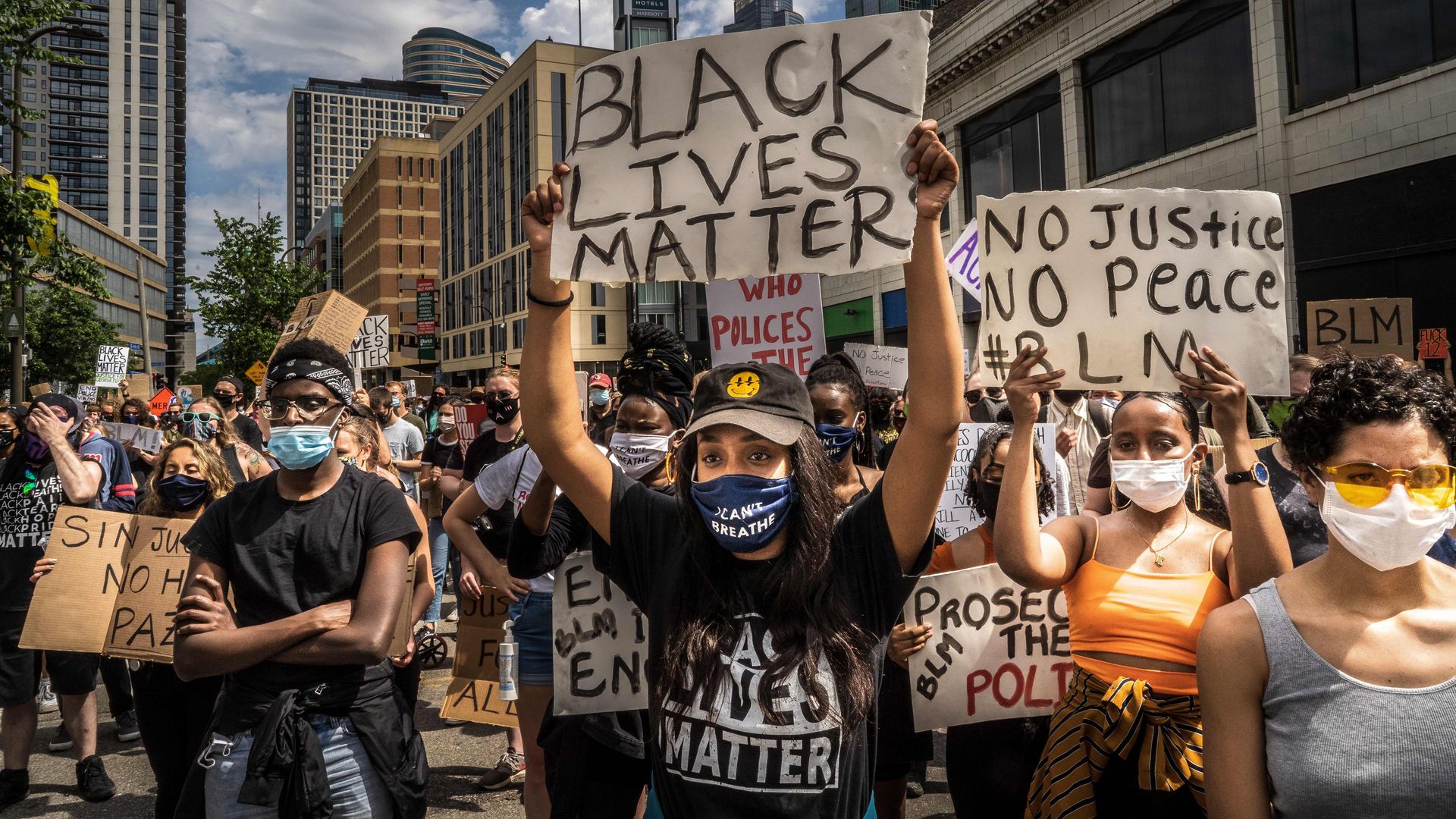
Protesters outside the Minneapolis 1st Police precinct during a demonstration against police brutality and racism in Minneapolis, Minnesota, in 2020. Photo: Kerem Yucel/AFP via Getty Images

Carter also said that Tony’s “racial ambiguity reinforces the fact that America’s racial lines are completely and 100 percent blurred…We are all multiple races and we each have our own complex heritage. There’s no way you can look at me, there’s no way you can look at Tony or any of my nephews, and determine 100 percent what we are, in terms of our heritage and our ethnicity.” Despite the assertion that America’s racial lines are 100 percent blurred (not necessarily) and that Carter and his nephews can not be easily racially categorized (perhaps), these young men are viewed by the state as men of color, particularly ones who are deemed threatening and less innocent. Carter notes this himself when he refers to his nephews as “black children of a white mother.” However, it is this emphasis on the “children of a white mother” that causes me concern. When multiracial families insist that racial lines are blurred, they are working to validate their own experiences. This is why many parents of mixed-race children insist that their children are “both” (see, for example, pieces by Jacobs and by Kich in Racially Mixed People in America; and, Rockemore, et al., in Mixed Messages).

By placing the focus on “a white mother grieving her child,” we might think that it is white motherhood that is under attack rather than black and brown bodies.

The “he’s not black, he’s mixed” argument seems like it would be one that could work in the family’s favor; by painting Tony Robinson as “a mixture of everything” and “not just black,” Carter’s comments assert a connection to whiteness as a strategy of redemption in the midst of media demonization. Though it can be argued that these comments also attempt to diminish the value of whiteness, this ignores how multiracialism has a history of complicity in anti-blackness (for more on this, see Sexton).

Andrea Irwin , the mother of Tony Robinson, marches in the streets... News  Photo - Getty Images
Andrea Irwin, the mother of Tony Robinson, fights back tears at a press conference held by the Tony’s family near where he was shot following the Dane County District Attorney’s announcement of no charges for the officer (Source: Scott Olson /Getty)

By playing up Robinson’s whiteness, his tragic mulatto-ness, the family’s comments engage in distancing from blackness and, thus, from danger. To have the deservedly emotional white mother and white grandmother standing behind Carter as he makes his statement bolsters this whiteness and therefore, our need as Americans to be concerned with Robinson’s death. The murder of a young black man – who was already a tragic tale due to being a racial “outcast” – is seemingly more tragic now that he has a white mother to grieve him. A problematic logic is further supported through Carter’s comments on having “multiple races” and “complex heritage.” To be “more than” implies colorblindness – that the issues of state violence and police brutality are beyond race.

So, it’s not surprising that media outlets picked up on the “beyond race” thread in Carter’s comments as it strengthens the colorblind logic that race “cannot be seen,” promoting universal sameness. The “all lives matter” rebuttal relies on colorblind racism; to point out that race informs the disparities we see in police-related assaults is to “be” racist. Carter’s statement that he and his nephews are beyond “just” black provides mainstream media with a post-racial soundbite that can be used to further undermine the insistence that black lives matter.

It is tragic that Andrea Irwin, Robinson’s mother, was reminded that her son was viewed as black when the state exercised violence against him. I imagine her realization was akin to Jane Lazarre’s realization that her whiteness would not protect her son from being strapped down to a hospital bed and treated as inherently dangerous. Though I had wondered if the family’s assertion of Robinson’s whiteness might lead to an indictment of the officer who killed him, as we have seen, that is not the case.

Not only was it ruled that Officer Kenny “legally” used deadly force, he was praised for his approach in the situation that ended in a 19 year-old black teen’s death. As Carter insightfully states, his nephew’s death “highlights a universal problem with law enforcement and how it’s procedures have been carried out…specifically, as it pertains to the systematic targeting of young black males.”

With no justice for Tony Robinson, it is my fear that no mother’s grief – including Andrea Irwin’s — transcends the deeply entrenched belief that black lives do not matter.

The Impermanence of the Digital

I only recently discovered that a critical blog on race, ethnicity, and racism social science theory and research that I relied on during graduate school (to learn about new work and to share my own insights on recent events) appears to have gone defunct. While I did find my personal contributions using the Wayback Machine over at Internet Archive…I realize that there is going to be an increasing need for me to not only keep my own copies of whatever I submit to these outlets stored somewhere other than the “cloud”…but that I probably will need to use this blog to keep my public writing available for as long as I’m able.

I am thinking about all the writers who have had their digital footprint erased with the folding of various online outlets or who have no digital footprint whatsoever because their work was in print and never converted to digital.

I am thinking about how many thinkers become “unknown” when all the people who read their work are no longer around and they didn’t manage to build enough of a reputation that subsequent generations after them are still interested in their work or are assigned it in school. I am thinking about what it means to maintain our own archives and physical libraries.

With my maternal grandmother’s recent passing, my sisters and I have discovered a lot of “analog” (and some digital) detritus hidden or stored around her home — the many copies of receipts, bills, and important documents, printouts of news stories and recipes or pages cut from magazines, SO MANY MAGAZINES, scraps of images to reference for oil paintings, old VHS home videos from me and my siblings’ and cousins’ childhoods, hard copy photos and polaroids, and even CD-ROMs full of photos. I am hoping to pull these images off these discs to print hard copies that will last longer (yes, putting your data on discs or even hard drives isn’t a permanent solution). I’m trying not to stress myself out with thoughts of what my nieces and nephews or whoever ends up responsible for the detritus of my life will do with all of my physical and digital things. If keeping a record of my life and work will really matter all that much in the long arc of the universe.

Anyhow… my sabbatical seems like an ideal opportunity to figure how much of my writing needs to find a new place to live. It’s bittersweet but also a great reminder that we probably put too much trust in the internet being “forever.”

Understanding Kamala Harris, the Great Multiracial (Black) Hope

This is a repost from Bitch Media. I am reposting my pieces from that platform to this blog due to the fact that Bitch Media closed in 2022. In the event that the platform no longer archives their written work, it will remain here on my personal blog. This piece was originally published on November 2, 2020.

Kamala Harris, a light-skinned Black woman with short, brown hair, poses for a selfie with two Black women flanking her on each side

Democratic U.S. vice presidential nominee Senator Kamala Harris poses for a selfie during a Thurgood Marshall College Fund event at the JW Marriott February 07, 2019 in Washington, D.C. (Photo credit: Chip Somodevilla/Getty Images)

Though the last few months of political theater have certainly been terrifying, they’ve also provided ample material for those interested in engaging with the construction and perception of multiraciality in the United States. The race discourse surrounding Senator Kamala Harris arose in August when Democratic candidate Joe Biden selected her as his running mate, and it has quickly morphed from a mainstream conversation about the possibility of a Black woman president to a resurgence of the hope and change narrative that characterized President Barack Obama’s 2008 presidential campaign. Multiraciality is a central component of Harris’s candidacy in ways that it wasn’t for Obama: After all, being a multiracial child of immigrants bolsters a narrative of “futurity.” But others have observed that perhaps the only way a nonwhite person could make it onto a major party ticket is to be multiracial and therefore considered racially palatable.

By feeding a mainstream liberal belief that multiculturalism promotes inclusion, a candidate who embodies the crossing of racial boundaries holds even more value in the midst of a current administration that rejects diversity and inclusion training and dog whistles to white supremacists. The debate over the significance of Harris’s candidacy is certainly a result of gendered logics about who’s multiracial and how self-identified multiracial people feel about their gendered relationship to Blackness. Perhaps though, this debate is due to the fact that Harris is considered a “dual-minority” multiracial who’s not able to claim a so-called “high-status” white identity. Though Harris has never hidden her multiracial background (and the press itself has routinely noted it), her multiracial identity was less foregrounded during her presidential campaign than it has been in the days and weeks following her formal VP nomination.

In particular, Harris’s Asianness became a more significant part of her historic narrative after her nomination. An article about Harris’s Tamil heritage trended the day after Biden’s announcement, though there was no such trending topic about her Jamaican family. In a CNN roundtable preceding the vice-presidential debate between Harris and Vice President Mike Pence, Jake Tapper referred to her as a “trailblazer” for women, particularly Black women and South Asian women, and another panelist noted she symbolizes the “racial majority” of younger Americans. Articles have called her “the face of America’s demographic shift” and “fueled by optimism”—headlines and themes that echo the enthusiasm and effusive praise leveled at Obama in 2008. There’s been such a deluge that fact checkers have corrected social media users who interpreted various past and present headlines that refer to Harris singularly as “Indian American” and “Black” as not being evidence of her changing her race over time.

This controversy not only shows the media’s inconsistent references to Harris’s racial identity but it also illustrates the public’s confusion regarding multiracial identity patterns (which have been found to shift over time). In August, I noted on Twitter that while Obama was repeatedly framed as the first Black—rather than first biracial or multiracial Black—Democratic candidate and then president, Harris is seemingly two people: the first Black woman vice presidential candidate and the first South Asian vice presidential candidate. The separation of her milestones discursively separates her as a person. Harris often describes herself as a Black woman, only sometimes invoking her mother’s Indian immigrant story on the debate stage or in speeches (she does, however, note her accomplishments as the first South Asian senator as part of her Senate biography). She has intentionally avoided problematic model minority stereotypes like presidential candidate Andrew Yang and only briefly played up her Desi identity with targeted social media content, particularly the 2019 viral cooking video wherein she prepared masala dosa with Mindy Kaling. (She seemed to have no issues, however, perpetuating ugly stereotypes about Jamaicans with her pithy comments about her marijuana use.)

The press, political opponents, and the public have been increasingly interested in her story as a child of a South Asian immigrant post-nomination, with several stories explaining Harris’s parents time at the University of California, Berkeley, the caste system in India and how Harris’s family fits into it, and even her grandfather’s political career. Alternatively, Harris’s Blackness is not only stated and visible in her appearance—depending on who’s looking but is signified by aspects of her biography such as having attended the historically Black college, Howard University, and maintaining membership in a historically Black sorority, Alpha Kappa Alpha. Harris touts her parents involvement in the Civil Rights Movement—cheekily noting her participation in marches from her stroller—and her college years were shaped by post-1960s Black activism. Her perception as a (multiracial) Black woman is only helped by Maya Rudolph’s portrayal of her on Saturday Night Live, both due to Rudolph’s history of playing Black public figures (Michelle Obama, Beyoncé) and the fact that Rudolph is a multiracial Black woman herself.

Whereas Obama discussed selecting Black as his racial identity on the Census and he married an unambiguously Black woman, solidifying his Black “authenticity,” friends and I have discussed whether Harris’s white husband and stepchildren affects her perceived Blackness or not. Political media consistently noted Obama’s Black Kenyan father and white Kansan mother but rarely discussed him as anything other than an African American candidate whose white family gave him intimate and insider knowledge of how to unite Americans (a multiracial savior narrative Obama also relied on). Media focused on his father’s absence and career ambition while expressing concern that Obama’s narrative minimized his white mother’s life. Still, President Bill Clinton called Obama “a 21st-century incarnation of the old-fashioned American dream” claiming his “achievements are proof of our continuing progress toward the more perfect union of our founders’ dreams.” The notion of long held dreams being fulfilled continues to shape Harris’s political identity, most evident in her 2019 memoir The Truths We Hold: An American Journey (eerily a combination of Obama’s Dreams from My Father and The Audacity of Hope).

The post-racial society allegedly ushered in by Obama’s election has been thoroughly debunked by not only Obama’s eight years in office but also the way it bolstered a Trump presidency; Harris now navigates projections of hope—“forces us to look beyond Black and white”—and her own statements that “we” have the “ability to believe in what can be, unburdened by what has been.” That Harris is Biden’s running mate further situates her as Obama’s political successor, especially when they campaign to draw Black voters together. Lost in the “Harris as inheritor of Obama’s legacy” narrative is that Harris is Obama’s contemporary. However, with positive press comes racism and sexism as well. Within days of the announcement of her historic nomination, the political discourse shifted with anti-Black and anti-immigrant attacks. Trump renewed his birther arguments and several of his acolytes publicly accused Harris of “not being African American” because she has Jamaican and Indian parents and her “ancestry doesn’t go back to slavery,” illustrating a clear failure of understanding not only of how race is constructed but how diasporic Blackness in the Americas even came to be.

Following the vice-presidential debate, Harris was referred to as “Hillary Clinton in Blackface” by a pastor on Fox News and admonished across social media and conservative media for not controlling her facial expressions. Overwhelmingly, it’s clear that Harris is seen by many people as Black first, multiracial or not. What remains to be seen is whether there will be another discursive turn should the Biden-Harris ticket be successful in November. Will her election as vice president open the floodgates for another false “post-racial” moment in the mainstream social and political imagination? Will more multiracial political candidates emerge? Will the growing self-identified multiracial population feel represented by such figures? Many liberals cling to Obama as a cypher for “when America was good” and for a lot of voters, this goodwill has transitioned over to the Biden-Harris ticket. Even as Biden and Harris are framed as the lesser of two political evils by critics, Harris signifies hope for some disenchanted people in the United States. Whether she lives up to the hype (and whether the public will be satisfied with words of hope and change that don’t always match up with actions) is yet to be determined.

Yay, Us? In the World of “mixed-ish,” Colorblindness Is the Same as Anti-Racism

This is a repost from Bitch Media. I am reposting my pieces from that platform to this blog due to the fact that Bitch Media closed in 2022. In the event that the platform no longer archives their written work, it will remain here on my personal blog. This piece was originally published on December 12, 2019.

Mark-Paul Gosselaar plays Paul, a white man wearing a burgundy flowy shirt, and Tika Sumpter plays Alicia, a Black woman in a jean shirt and a curly afro, in mixed-ish

Mark-Paul Gosselaar as Paul, left, and Tika Sumpter as Alicia in mixed-ish (Photo credit: ABC/Eric McCandless)

There was muted excitement from critics and fans of Kenya Barris’s -ish universe when mixed-ish, the second spinoff from its origin series, black-ish, began airing on ABC in September 2019. As a multiracial woman and a scholar who studies mixed-race people and families, I also felt unsure about how watchable mixed-ish would be, especially after the show’s trailer trafficked in clear clichés. That uneasiness has tempered for critics, who’ve called the show “a heartwarming family comedy with built-in lessons about race and the perception thereof” that isn’t “afraid to make its characters dig into uncomfortable places, face their internalized biases and interrogate what being biracial means.” ABC has also ordered a full season, but I’m still on the fence. 

Reviews of the pilot consistently noted the show’s clumsy approach to race, namely its reliance on contrasting a colorblind, post-racial commune with the oppressive suburbs full of racial stereotypes (or what feminist scholar Patricia Hill Collins calls controlling images) and the perpetuation of a tired narrative of multiracial exceptionalism. Still others have lamented the show’s saccharine approach to race in contrast to black-ish’s more nuanced takes on a number of social issues, including colorism. While these critiques are deserved (Mariah Carey’s catchy theme song repeatedly extolls that love is “all we need to be free” and “yay, us!”—the “us” presumably being multiracial people and/or families), I’ve found it interesting that mixed-ish still relies on problematic racial and gender politics to motivate its tension and humor.

As Shannon Miller noted in a review for the AV Club, assimilating into mainstream culture is realistic and relatable enough to be the basis for a show; after the Johnsons are forced to flee the commune they call home, Alicia (Tika Sumpter), Rainbow’s dark-skinned, natural hair-wearing, hippie clothes-rocking mother, becomes the voice of racial reason when her white husband, Paul (Mark-Paul Gosselaar), is critical of how she changes her appearance for a new job at his father’s law firm. She reminds him that he doesn’t have to change himself outside of the commune “because you can be how you are anywhere in the world.” Alicia notes, “I’m a Black woman. It’s different for me and it’s different for our kids.”

This revelation comes after an entire episode where Black characters are framed as inherently antagonistic: Alicia’s sister, Denise (Christina Anthony), tells Rainbow (Arica Himmel), Santamonica (Mykal-Michelle Harris), and Johan (Ethan William Childress) they look like “a runaway house slave” with their natural hair, and approaches them with hair grease and hot comb in hand. There’s also the much-discussed lunchroom scene where Bow, Johan, and Santamonica are accused of being “weirdos” because they’re mixed-race, and they’re forced to choose between sitting on the Black and white “sides” of the cafeteria. Later episodes maintain this dynamic; in “The Warrior,” Bow is pitted against an aggressive Black teen girl who teams up with a white girl to bully her after she refuses to take a side when the Black teen is unfairly accused of theft.

In “Love Is a Battlefield,” Alicia and Denise get into a fight over what Bow should use to represent authentic Blackness in a class project about representing her cultures. At one point, Denise even tells Alicia, “Excuse me for wanting to whoop your barely Black ass!” an exchange that Bow refers to as “Black on Black crime.” Though this episode illustrates the difference between how white people and Black people arrived in the United States, “Black culture” is framed as complicated and unclear while “white culture” is straightforward and easily understood, a juxtaposition that’s made more irritating by Paul’s father Harrison (Gary Cole) attempting to compare the trans-Atlantic slave trade to “legal” Scottish immigration.

When Alicia criticizes Harrison for misunderstanding slavery, Paul attempts to appease her by patting her hand and saying, “I’m so sorry for that my possibly Nubian queen.” Even a Sadie Hawkins dance at Bow’s school in “All She Wants to Do is Dance” becomes a cause for concern, with Denise spending the episode worried about Bow asking a white boy to be her date and Alicia being concerned that Paul may have a fetish for Black women. These kinds of iffy narratives around race, gender, and class abound in the show, particularly when Alicia reminds her white spouse of the realities of being (read as) Black in the United States while reinforcing how the family’s time on the commune consisted of “no racism” and “no sexism.”

We learn in the pilot that Paul dropped out of Berkeley Law school to “protest the glass ceiling of classism” (it’s unclear what the show means by this) while Alicia graduated because “Black people always need a backup plan.” After Harrison recruits Alicia to work for his law firm because she has the “legal chops to become the son I never had” her husband implies she’s betraying their values by trading in her loose hair for a tight bun and her flowy skirts and blouses for boxy suits, though his father essentially demanded these changes to her appearance. Paul’s racist father frames Alicia’s efforts to support her family as masculine, while her husband perceives her actions as morally deficient, sarcastically quipping that she is “setting a great example” and engaging in call-and-response with their children as a subtle dig: “Who conforms? Capitalists!”

Meanwhile, Bow perceives Paul as the parent who’s “truly committed” to their commune values because he continues pursuing agriculture, though he’s repeatedly failed to build a working greenhouse. The tension between Paul and Alicia plays out further in the season, as Paul falls into a homemaker role—waving off his kids and wife amid a sea of white suburban housewives—and Alicia faces significant racism and sexism at work. Denise predictably calls Paul’s masculinity into question, saying he’s “wasting perfectly good whiteness” by being a stay-at-home father and that “Black women don’t get down with ashy men or men without jobs.” Denise’s quips motivate Paul to use his whiteness to get a job. Incomprehensibly, he fails miserably, literally telling employers to hire him because he’s a white man— a gross misinterpretation of Denise’s jest that his qualifications are that he’s white (she also seriously noted that he had a college degree so he’d “be fine”).

The show intends to frame Paul’s struggle as comedic, but it makes no sense that a privileged white man with a bachelor’s degree who attended Berkeley Law would have zero clue about how to leverage his skills into a job. My discomfort with the show’s approach to race grew when Alicia compares Paul’s employment struggles and questioning of his own identity to the ostracism she and their kids encounter. Alicia equates the kids feeling different as biracial kids (facing “two racist fronts”) and Paul feeling different because he doesn’t know his place outside of the commune. The show even contrasts doors being slammed in Paul’s face with Alicia daydreaming about “going ghetto” on racist and sexist coworkers by yelling at them in African American Vernacular English, taking off her earrings and handing them to Denise, and clapping for emphasis during a daydream sequence. That we are supposed to laugh at—and find heartwarming—a white man struggling to find employment and eventually finding happiness in his place as homemaker is a tough sell. It’s even tougher considering that there’s nothing groundbreaking about this decision, as this isn’t even pop culture’s first attempt to use a husband’s failings in a marriage with a much more accomplished wife as a source of humor.

Seth Meyers’s 2019 standup special, Lobby Baby, features him performing jokes from the perspective of his wife, all of them noting his own incompetence when it comes to raising their children and being able to do something as simple as locating yogurt in the refrigerator. Reinforcing how white people—affluent white men in particular—are allowed space to be mediocre while people of color must be exceptional is frustrating fodder for a comedy in 2019, especially one in which the Black mother states that her biracial kids are facing racism from the white and Black kids at their school. The show’s insistence on the commune “bubble” as raceless and colorblind, in contrast to a blatantly racist real world, fails to acknowledge that having no explicit racism and being anti-racist are two separate things; even Paul can’t resist telling everyone his wife is Black as though that is an achievement in of itself.

Though many Black multiracial actors have landed iconic roles as Black characters, there’s still a dearth of pop culture with multiracial characters who contend with what that multiraciality means socially and politically. Despite mixed-ish’s penchant for leaning into tragic narratives (especially as Bow feels left behind by her siblings who choose between their school’s Black and white students and take on exaggerated Black affect in dress and speech) there’s also a lot of potential for integrating analysis of multiracial experiences within a broader set of racialized experiences, which is best demonstrated by the “Let Your Hair Down” episode. Johan wants to don “Black” hairstyles, so Paul and Harrison take him to a Black-owned barbershop, where he is turned away because the barbers don’t know how to style his grade of his hair. Johan’s frustration boils over when his Black peers tease him over Paul’s poor attempt to put Stevie Wonder-inspired “corn rolls” in his hair.

In the voiceover, Bow notes that mixed-race Black men overcompensate when their Blackness, and therefore, their masculinity, is threatened. This is a really important observation, as research on multiracial men is fairly limited due to many mixed-race men rejecting a mixed-race/biracial/multiracial label more often than women. But these kinds of points are few and far in-between. Even as mixed-ish reflects familiar aspects of my childhood, there’s still much to be desired. (I remain particularly confused by the fact that no Black girl or woman in Rainbow’s life, including her aunt, her mother, or even the school bully, tells her she needs wrap her hair to maintain her silk press!). My hope is that mixed-ish continues interrogating how it presents race and gender as intertwined identities and social positions and considers more thoughtfully the ways they’re used as sites for humor.

Racial (Dis)Harmony: The Overestimated Post-racial Power of Meghan Markle

This is a repost from Bitch Media. I am reposting my pieces from that platform to this blog due to the fact that Bitch Media closed in 2022. In the event that the platform no longer archives their written work, it will remain here on my personal blog. This piece was originally published on December 1, 2017.

Meghan Markle and Prince Harry

Photo credit: Twitter/newsjsBW

This week, the engagement of American actress Meghan Markle to British royal Prince Harry set social media ablaze.

Race is at the center of this internet firestorm: Markle is biracial, with a Black mother and white father. As a Black and white mixed-race woman who studies multiracial identity and interracial relationships, the online debates over Markle and her fiancé have been both perplexing and unsurprising. Over the last year, Markle’s racial background has drawn negative press in Britain. Last November, Prince Harry publicly called out the barely veiled racism and sexism in the media coverage of their relationship. Despite this treatment, their engagement is viewed as an opportunity to change what it means to be British and royal, with American fans celebrating a “real Black princess” who will bring #BlackGirlMagic to the royal family and the seemingly stale royal wedding traditions. Several essays have been written about what Markle’s presence means for the British monarchy and the broader racial politics of the West.

Hiding under the surface of the more hopeful pieces—namely Afua Hirsch’s argument that their union will alter race in Britain forever—is an assumed post-racial exceptionalism often projected onto mixed-race people and interracial couplings. As British comedian Gina Yashere noted in a Channel 4 roundtable interview, Markle is “not exotic” and “not from a tribe in the Amazon,” but is merely “an American.” The thread of simultaneous exoticness and mundaneness that permeates the discussion of Markle, as well as the suggestion that her marriage to Prince Harry will be Britain’s “Obama moment,” implies that multiracial people can foster racial harmony by merging supposedly disparate racial backgrounds. In my own research, I have referred to this framing around mixed-race women as the construction of an utopic subject: a figure that embodies an idealized racial future where race is no longer relevant, presumably achieved through interracial sex, marriage, and procreation.

This notion is best summed up by the iconic November 1993 TIME cover story featuring the computer-generated “Eve,” the so-called new face of America. Within the contradictory logics of alleged multicultural societies like the United States and the United Kingdom, Markle is exotic by virtue of her Blackness and her racial ambiguity. Yet she also is framed as unremarkable for these same reasons; for some, Markle’s Blackness is nothing to celebrate because she’s part of a Eurocentric-beauty-standard conforming, biracial-identifying package. Yashere’s comments also call attention to the ways Markle’s biracial background has been framed as inherently radical; her infiltration of the white establishment—the literal figureheads of the British Empire and colonial power—is (jokingly?) viewed by some as an intentional undermining of whiteness.

Yet British academics have suggested that Markle will not have the opportunity to figuratively shake the table because she will likely be pressured to avoid foregrounding her biracial identity and pass into whiteness. There is also the uncomfortable fact that African and Caribbean nations are still suffering from the colonial legacies of the British and other European powers; given these legacies, is it even reasonable to expect Black people in the diaspora to celebrate this marriage? While Markle has yet to explicitly make any claims that connect her race to the future of Britain, her 2015 Elle essay is telling. Within it, she notes the pressure from her teacher to identify solely as white, since “that is what she looks like” and her subsequent confusion since she envisioned her mother being hurt by that choice. Her adamant embrace of a biracial, rather than Black, identity has been met with joy from some mixed-race people (who feel that biracial people are underrepresented in media) and ire from some Black Americans who feel that she is either distancing herself from Blackness or that she is just more of the same light-skinned, normative representation that Hollywood has provided for decades. Others question whether marrying a royal is representation at all.

It is unlikely Markle will ever hold the title of princess or queen, given that Prince Harry is now fifth in line to throne; instead, she will be named a Duchess once Harry receives his title on their wedding day. Plus, Markle is hardly the first Black or mixed-race woman, let alone the first American, to wed royalty. So why has her engagement inspired such strong reactions? Thanks to the scourge that is normative gender-binary socialization, many young girls and women are inundated with popular culture images and stories that privilege a princess fantasy, wherein they get their heteronormative happily ever after with the handsome man of their dreams. Disney has based much of its business model on selling the princess narrative, slowly diversifying its roster of cinematic princesses with the likes of Jasmine, Tiana, Moana, and Mulan (who was not royalty and never married a prince). Though Tiana was celebrated as a Black Disney princess, even her portrayal drew critique because she’s a frog for the majority of the film. While it’s easy to chalk up the excitement over Markle’s engagement to a need for levity and joy in such dark times, it also illustrates the investment in even surface-level representation and the continued power of the notion of the princess, particularly the idea that joining an establishment like the British royal family is an achievement on its own.

Meghan Markle

Photo credit: Wikimedia Commons

Meghan Markle (Photo credit: Wikimedia Commons)

The underlying tension regarding skin color privilege and beauty aesthetics further complicates this notion of representation. Rachel Zane, Markle’s character on Suits was a biracial paralegal-turned-lawyer who made visible the workplace experiences of women of color; however, representation in scripted media is not necessarily transferrable to a royal wedding. The true representative value of Markle’s engagement is that it provides a high-profile case of what interracial relationships can look like for mixed-race people. Despite the attention paid to the growing mixed-race population in the United States, it is uncommon to see romantic relationships involving multiracial people reflected in pop culture. Advertisements featuring interracial couples or families continue to draw backlash, and even Markle noted the importance of her parents combining doll sets for her so that she could have a doll family that looked like her own.

Yes, there are a number of mixed-race actors and actresses that play romantic love interests; many of these characters, however, are written as monoracial. This is especially the case with a majority of films and television shows that feature Black women as the protagonists; actresses like Halle Berry, Paula Patton, Jurnee Smollett-Bell, Zendaya, and Amandla Stenberg perpetuate an image of Black women as only light-skinned. Even the social science research is limited in its understanding of the relationship practices and experiences of mixed-race adults, though some online dating research suggests that just being mixed with white increases a person’s desirability and attractiveness. My own research indicates that there may be a tendency among mixed-race women to seek white partners, a trend some scholars conclude is a result of the “honorary whiteness” some multiracial people have access to.

For multiracial women who are unambiguously women of color, the quality of their dating experiences differs significantly from women who are more white presenting. In fact, women who are mixed with Black and who are darker-skinned end up performing extra work to “vet” potential partners and determine if they are worth dating based on racial politics. Thus, Markle and Prince Harry provide a reference point for those who do (or don’t) see value in interracial relationships, but also give mixed-race people in interracial relationships a way to see themselves. The relevance of such visibility seems greater at present, given the waves of white nationalist sentiment that demonize such pairings. While it would be irresponsible to think that this marriage will directly result in any substantive social change, it is also important to not dismiss the power of symbols, no matter how surface level they may be.

[Black] bodies are not monuments.

It has been 24 hours or so since I first came across an opinion piece from a poet and academic proclaiming her body a “monument to the Confederacy.”

I have continued to dwell on her opening line: “I have rape-colored skin.” Her choice to call her body and skin a monument to the “legacy of the Confederacy.” The fervid responses from colleagues and people I admire calling the piece powerful while others call(ed) it deeply uncomfortable, upsetting, gut-churning. My own reactions of dismay and alarm and later, confusion, disrupted my sleep and have felt like a burden taking up space in the back of my mind all day.

What does it mean to call a body a monument — specifically a Black body — particularly a monument to the dehumanization, brutalization, and exploitation of our Black predecessors? What does it mean to offer up how that trauma and horror of colonization, of chattel slavery, of Jim Crow is embedded and embodied and how that “legacy” should not just be acknowledged but also lends legitimacy to Black people’s calls to tear down actual monuments to the Confederacy? Who is the target audience when one says they have “rape-colored skin” (as though only light-skinned Black people were produced from these assaults) or that they have “rebel-grey blue blood coursing [their] veins” (as though the racial ideologies of our Black ancestors’ rapists, abusers, exploiters, oppressors are genetic and inherited via blood)? Who are you trying to shock and awe, to convince to join in the destruction of these mounds of stone and steel meant to symbolize the indomitable spirit of the white South?

Many of my favorite writers have thought long and hard about what it means for bodies to be sites of contestation. That the existence of people we in the United States currently identify as “multiracial” or “mixed-race” pre-dates the so-called Loving Generation. That their bodies symbolize(d) histories of conquest, increases in property value, or even contamination of whiteness seems to undergird Williams’ argument of “body as monument.” We — as a settler colonial society — certainly need to think about the ways who we are today and the lives we live, the things we believe and value, are a product of the relations between people who understood themselves as supreme human beings (entitled to the land and bodies of other people) and those they deemed racial “others” who are/were understood not just as lesser but quite literally inhuman. We need to contend with what it means for people to have involuntary “familial” connections borne out of assault and abuse, for those histories to inform present-day iterations of economic, political, and social assault and abuse.

If Black bodies are not monuments to the Confederacy, what are they? Are they not monuments to Black people’s perseverance, love, community, creativity, imagination? To hope? Why frame our bodies as sites of pain, biologically tied to white “ancestors”? Why make any biological arguments about non-white people at all, knowing how fraught that is?

I remain unconvinced that reducing race to the body, to the genes that make up our DNA (and when combined in particular ways may favor certain characteristics), is the way to motivate white people to see that Black people, and really any colonized peoples, are human and deserving of respect. That our bodies and the harm bodies like ours have experienced in the past will inspire white people to end their desire to leave up physical places of honor for people who were so invested in owning other human beings that they seceded and fought a losing war in order to protect their “property.” But it is not only the legacy of the Confederacy that must be destroyed but that of the entire United States — Confederates weren’t the only ones holding people in bondage or working to keep Black people from gaining any semblance of access to basic human rights. Even the leaders who are lauded as the “fathers” of this country kept Black people as property, believed many of the same things their Confederate brethren believed (thus why we have so many Confederate statues or buildings named for its leaders in states that weren’t even in the Confederacy). I am as appalled at Williams’ framing of her biological connection to the Confederacy and the Ku Klux Klan as I am by the defense of Ulysses Grant as “one of the good ones” because he emancipated the singular enslaved African that he inherited through marriage.

Rooting moral logics in being for or against the Confederacy alone leaves a lot to be desired.

There is no such thing as “one of the good ones” when you owned other people and participated in the massacre of indigenous peoples and the theft of their land. There is no such thing as being genetically white or Black, because to be white or Black is about social and political relation. There is no such thing as an ancestral relation between us and the people who forcibly took land, bodily autonomy, rights, cultural practice, and family from our Black predecessors simply because there are “blood ties” or shared chromosomal markers. We are within our rights to demand the removal and eradication of statues, of named buildings, of flags, of songs, of awards, of all lingering traces of the Confederacy not because of shared history or biology…but because we wish to imagine and bring forth a world that rejects the valorization of people and ideologies that diminish the humanity of anyone. Destroying the vestiges of the Confederacy should not be the end of this fight. Everything this country was built on must go, too.

a hello, of sorts.

I have done a lot of back and forth with myself over the years about whether blogging is something I can actually keep up with regularly. I’ve never been much of a diary writer (except for a brief time during my teenage years when there were just too many feelings to process). Haven’t been much of a letter writer, either. I have thoughts going through my head about all kinds of things, all day long, but rarely take the time to write them down (aside from tweets).

I have realized, though, that a centralized place might be a good way to get out some of my more “professional” thoughts on things that doesn’t necessarily require me to go on at length on Twitter and that don’t merit writing an op-ed for some outlet. I envision this being a space where I can reflect on things I’m learning from teaching or mentoring or something I watched or read. A place to unpack what bothers me and what (intellectually) excites me. A place for all the casual “sociologicalizing” that my mother hates. A place to do some writing simply for the enjoyment of writing instead of for the purpose of furthering my career and “making a contribution.”

I can’t promise that I will update this regularly. I also can’t promise that anything I write here will be any good. But I keep thinking about connection(s) and solitary-ness and being lost in my own head in the midst of finally having a break from teaching (and the other social responsibilities of this job) for the first time in nearly a decade, in the midst of a global pandemic. It is my hope that it might be easier to commit to the sage academic advice of “writing every day” if I don’t have to be writing something for publication. Maybe at the end of this sabbatical I’ll have established some better approaches to my writing… or maybe not.

So, let’s give this try.